- Published on
From Faster Calculations to a Complete Research Study
Speed is useful only when repeated calculations return the same ordered result and preserve the study design. The notebooks connect deterministic work partitions and named methods to a complete chronological portfolio example.
The central relation
For indivisible tasks divided into ordered groups, boundary is
is the group boundary, is its position, and rounds upward. The rule covers each task once and makes the partition independent of completion order.
Following a result from calculation to decision
The calculation panel checks equality and timing across serial and parallel execution. The final drawdown plot keeps the adverse periods of the selected portfolio visible.
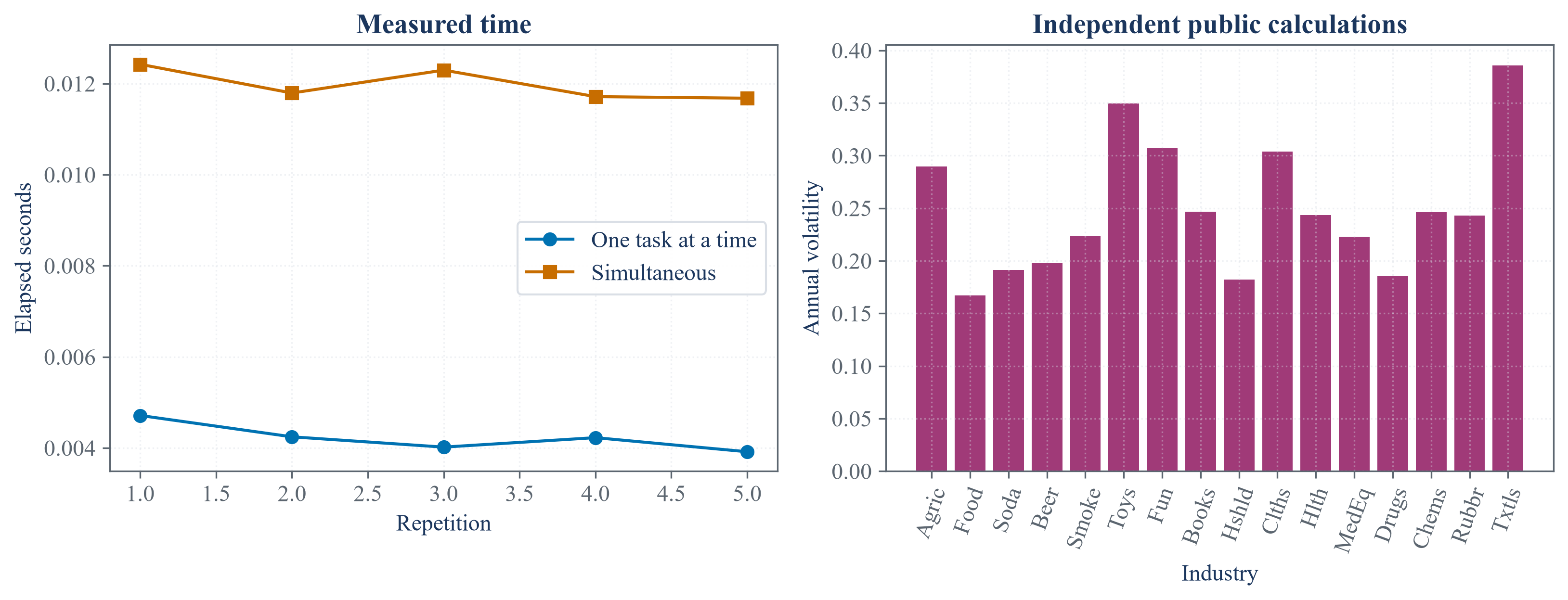
The result check is primary: parallel execution is accepted only when it reproduces the ordered serial calculation before timing is compared.
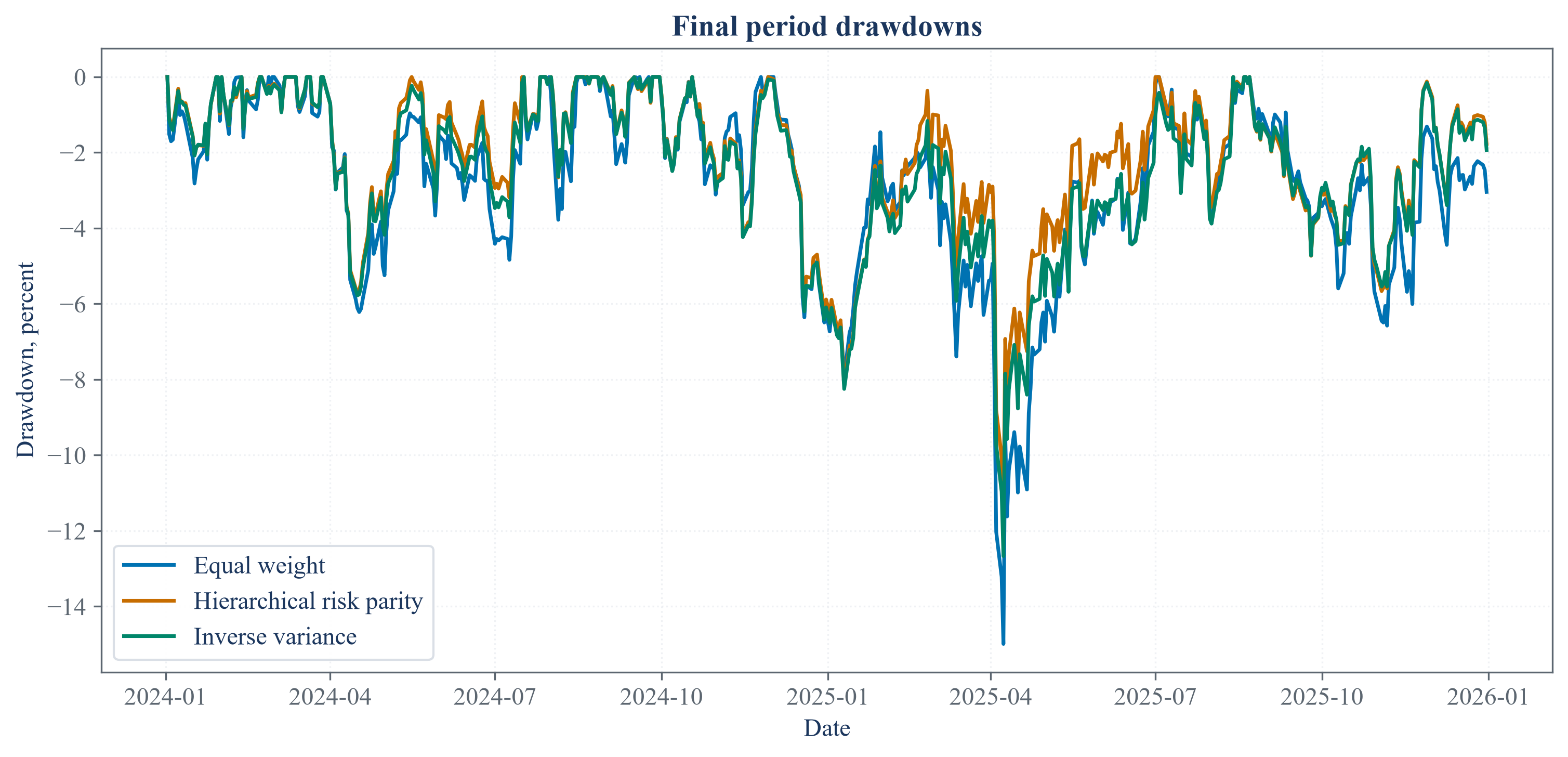
The final period is kept separate from method selection. Drawdowns are shown beside aggregate results so unfavorable intervals remain part of the evidence.
Reproducibility requires more than a fixed seed. It also requires fixed inputs, ordering rules, method names, chronological partitions, and checks on the final decision.
Notebooks
| 1. Combining parallel calculations in a fixed order |
| 2. Extending the named method registry |
| 3. From Public Observations to a Checked Portfolio Decision |