- Published on
Transporting Effects across Populations
An effect measured in one population need not equal the effect in another. The notebooks make the difference explicit by separating subgroup effects from the subgroup mix in the study and target populations.
The central relation
For discrete groups, the target effect can be written as
labels groups that modify the effect, is the effect learned in group of the study population, and is that group's share in the target population. The superscripts and refer to the study and target populations.
Reweighting effects for a target population
The recovery example shows how target population weights change the transported effect. The public-data experiment compares study and target summaries and makes poor support visible before reweighting.
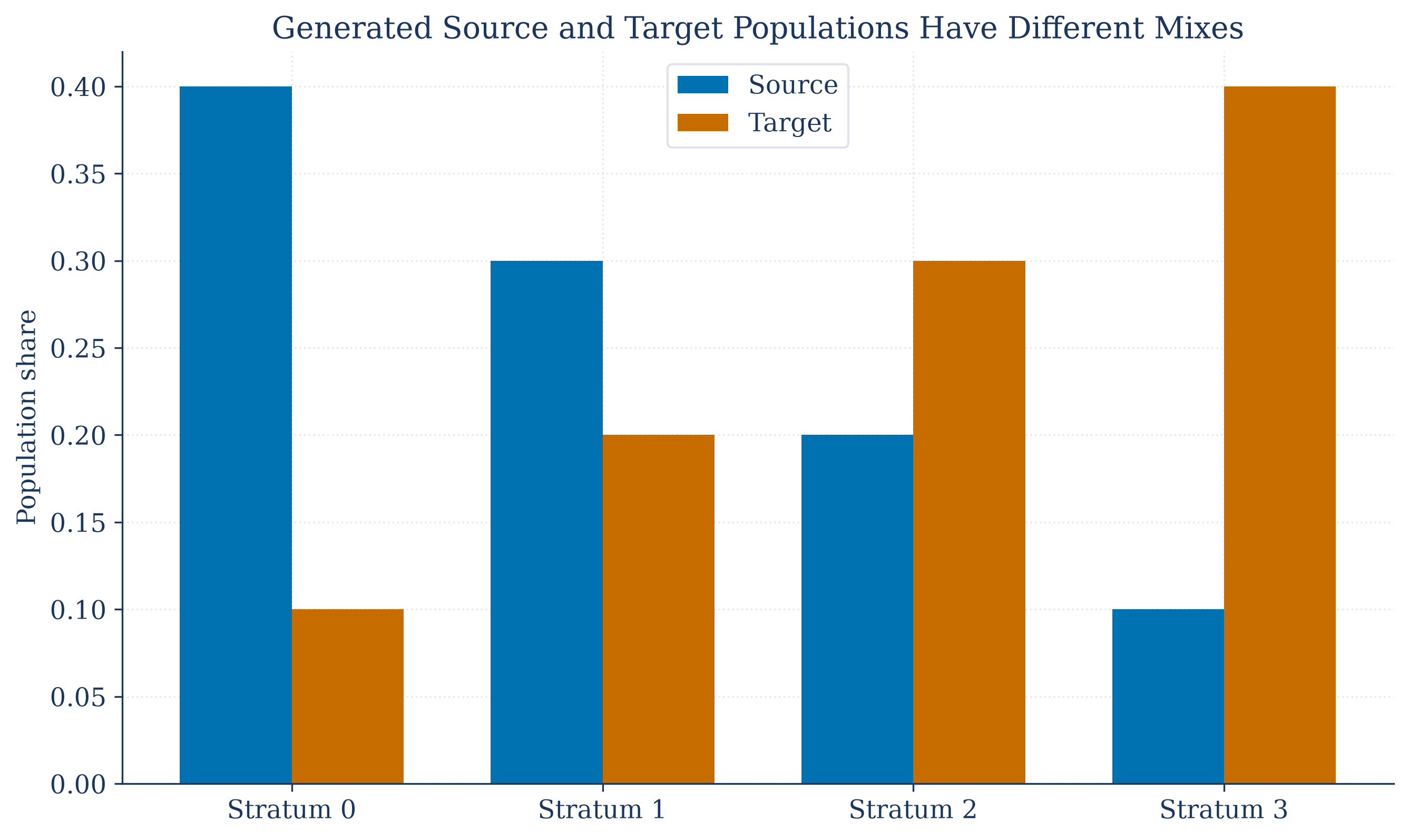
Transport changes the weight assigned to each subgroup effect. Groups common in the target population receive more influence in the target estimate.
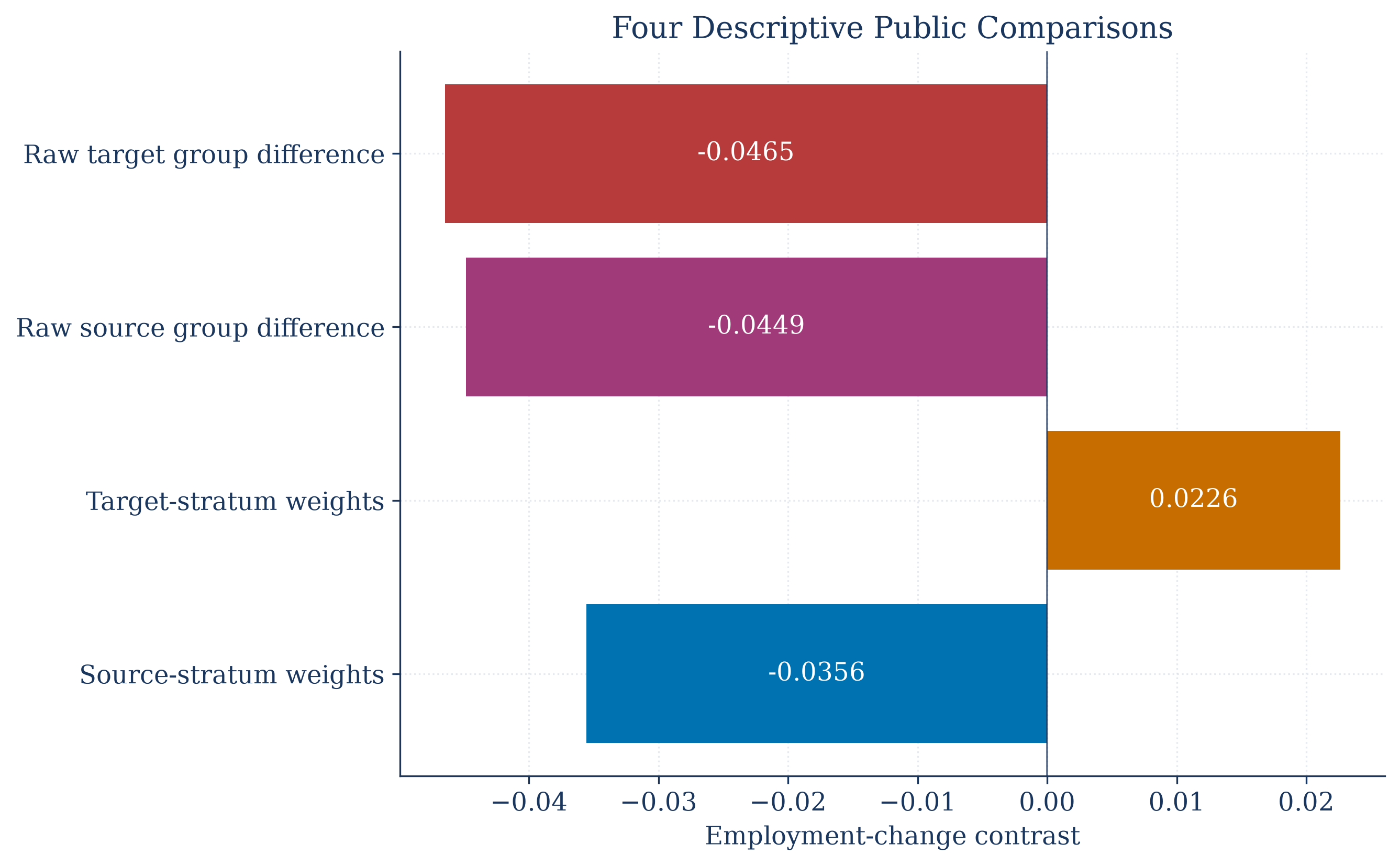
The public-data comparison shows the change produced by target weighting. It should be interpreted only where the study contains adequate examples of the target groups.
Transport requires both overlap and a defensible account of the variables that change the effect. Reweighting cannot recover a target group that is absent from the study.
Notebooks
| 1. Finite-Stratum Transport |
| 2. Checking support before reweighting |
| 3. Contrasting successful transport with failure |