- Published on
Portfolio Concentration through Majorization
A single concentration index can hide how weights differ across the largest holdings. Majorization compares the entire sequence of ordered partial sums and identifies when one allocation is a mean-preserving mixture of another.
The central relation
For weights ordered from largest to smallest, majorizes when
and are the ordered weights and is the number of holdings. The partial-sum inequalities compare concentration at every rank, while equal totals ensure the portfolios have the same overall weight.
Ranking portfolios by concentration
The controlled plot shows how ordered partial sums determine the comparison. The public example applies the same calculation to industry portfolio weights.
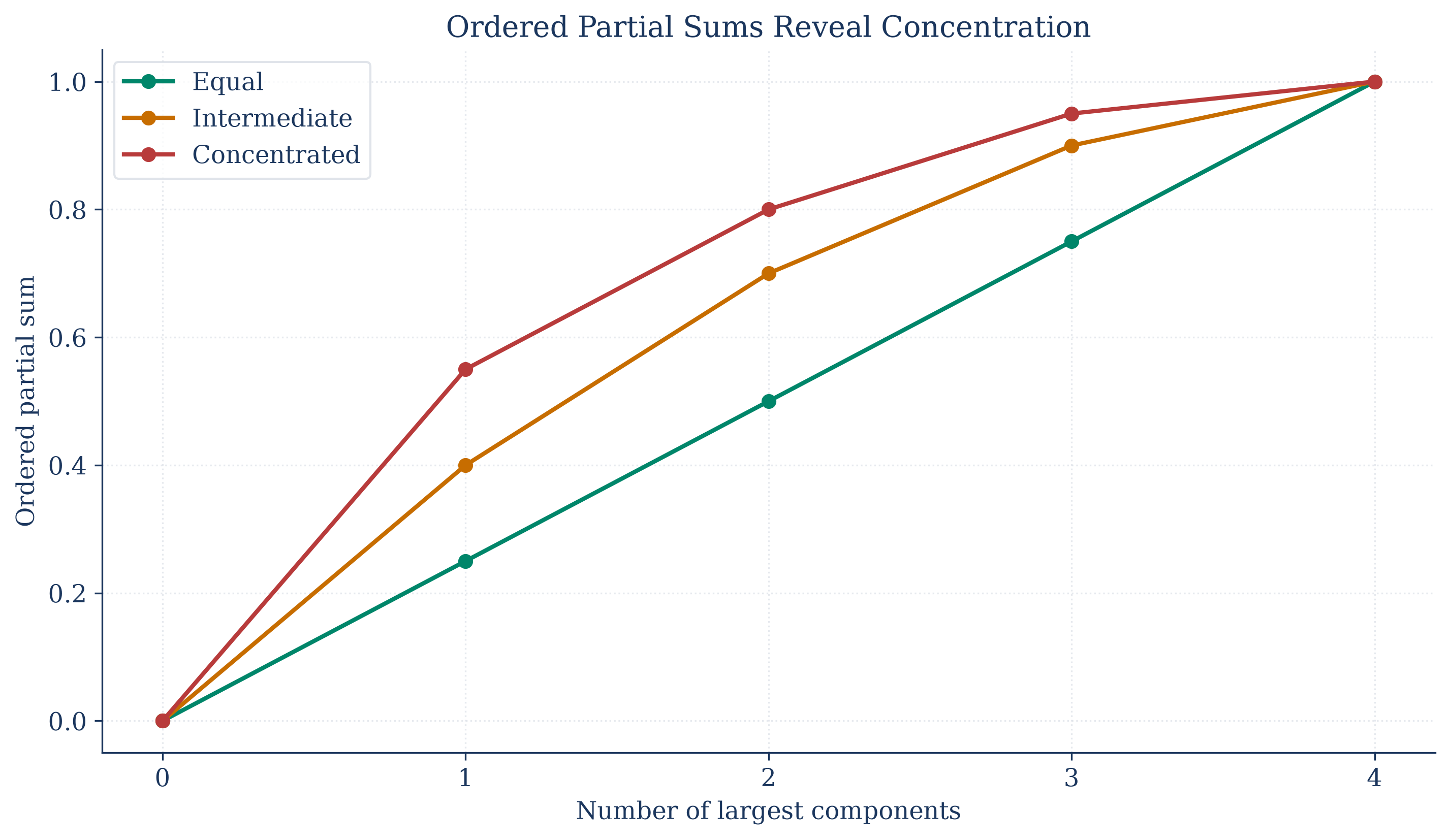
One allocation is more concentrated when its cumulative weight is never below the other before the final equal total.
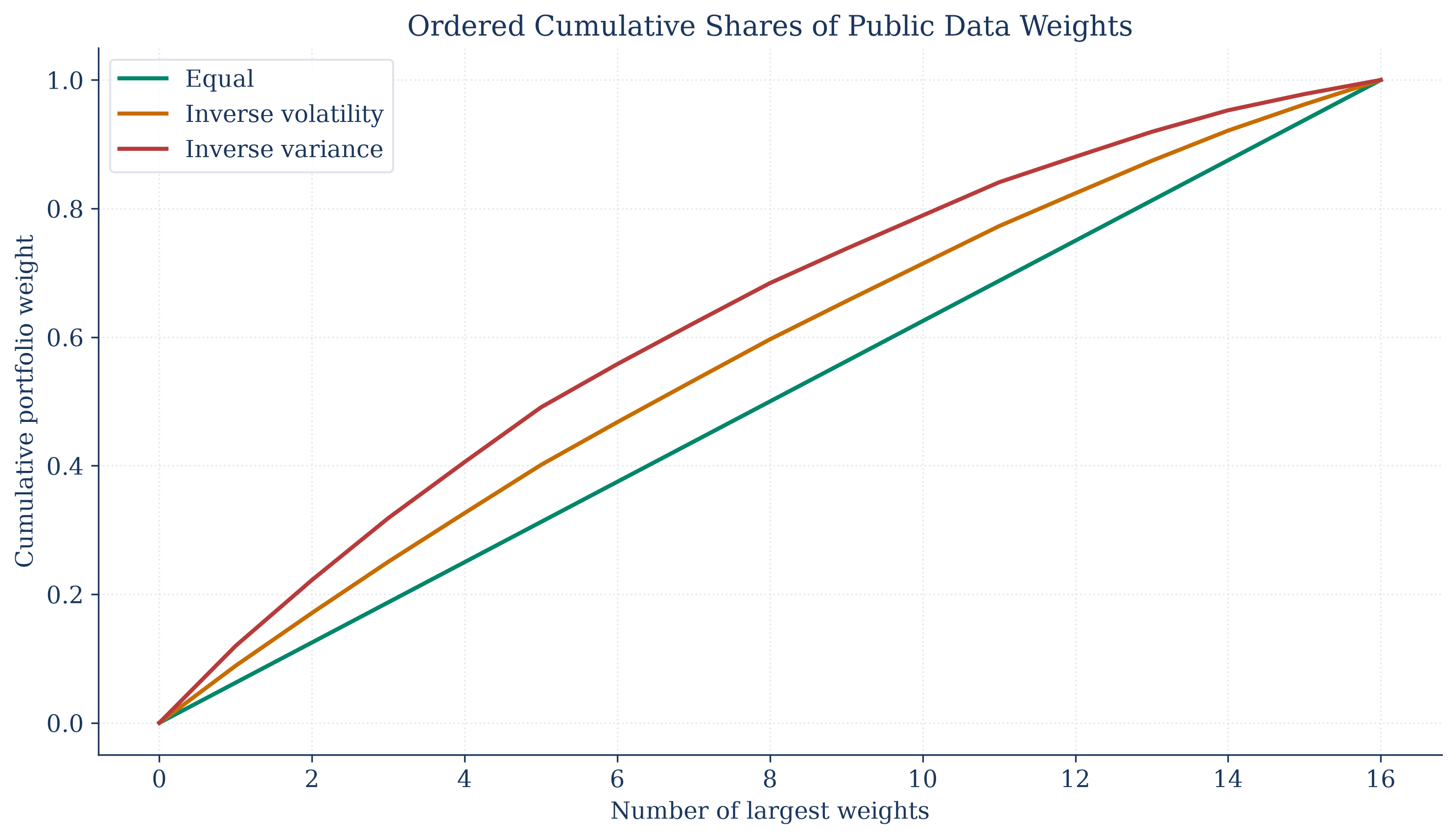
The public calculation reveals both clear concentration orderings and pairs that cannot be ranked by majorization.
Majorization gives a partial ordering. When cumulative curves cross, the method correctly leaves the two portfolios incomparable instead of forcing a rank.
Notebooks
| 1. Ranking concentration through partial sums |
| 2. Decomposing a doubly stochastic matrix |
| 3. Comparing concentration across public industry portfolios |