- Published on
Structural Models and Treatment Effects
A treatment effect compares what would happen under two actions for the same unit, even though only one outcome can be observed. The notebooks show how random assignment, structural assumptions, instrumental variables, and changes over time supply different routes to that comparison.
The central relation
The average treatment effect is
is the potential outcome under treatment, is the potential outcome without treatment, and is their average difference in the population. A study design must explain how this unobserved comparison can be learned from observed data.
How causal estimates respond when assumptions fail
The first figure separates individual potential outcomes from observed outcomes. The second uses repeated samples to compare difference-in-differences estimates when its identifying conditions hold and when they fail.
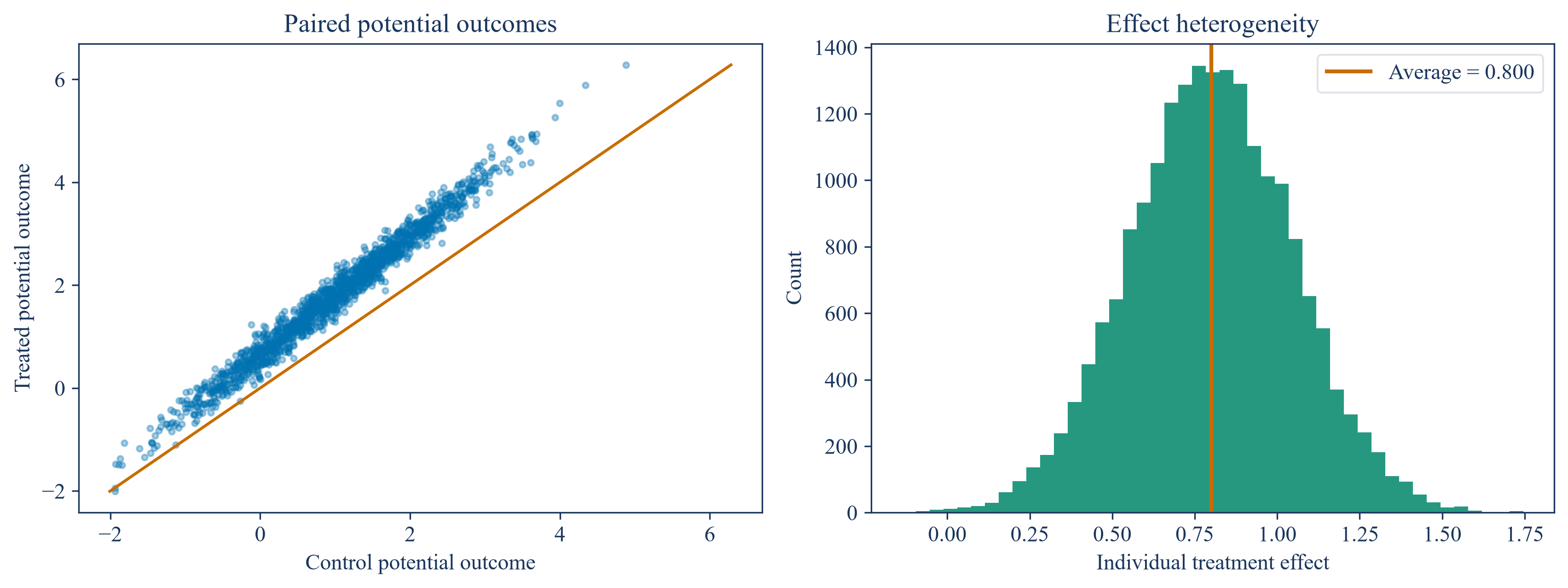
Each unit has two potential outcomes but reveals only one. Random assignment makes the treated and untreated groups comparable on average rather than filling in every missing outcome.
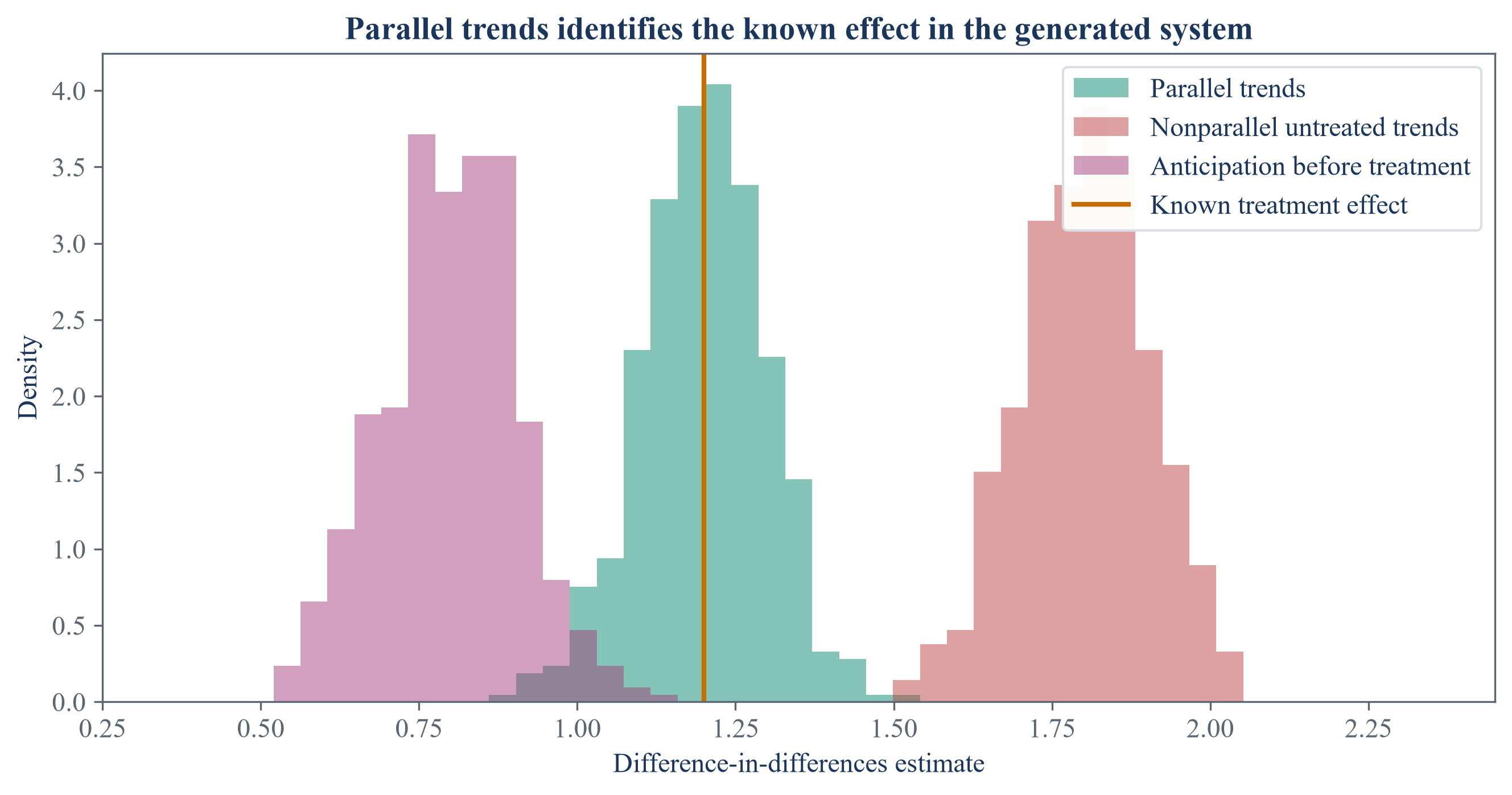
Repeated samples show how the estimator behaves under the stated trend design. When the untreated trends differ, the estimate moves away from the known effect.
Randomized studies, instrumental variables, and difference-in-differences answer causal questions under different assumptions. Their estimates should not be treated as interchangeable without checking the design.
Notebooks
| 1. Estimating average effects under random assignment |
| 2. Two routes to causal identification |
| 3. Evaluating a structural causal model |